- Rising dollar index reflects incoming foreign short term capital injection.
- Fresh rate hike prospects signal temporary relief and potentially more long-term pain.
- Rate hikes underscore more pressure on the bond market as the debt situation worsens.
The US dollar index clocked a 20-month high on Monday, after rising to levels last seen in April 2025. This comes amid expectations of more rate hikes, amid rising inflation.
The rising dollar index has analysts anticipating more rate hikes. Especially with the Federal Reserve expected to make another review of select interest rates.
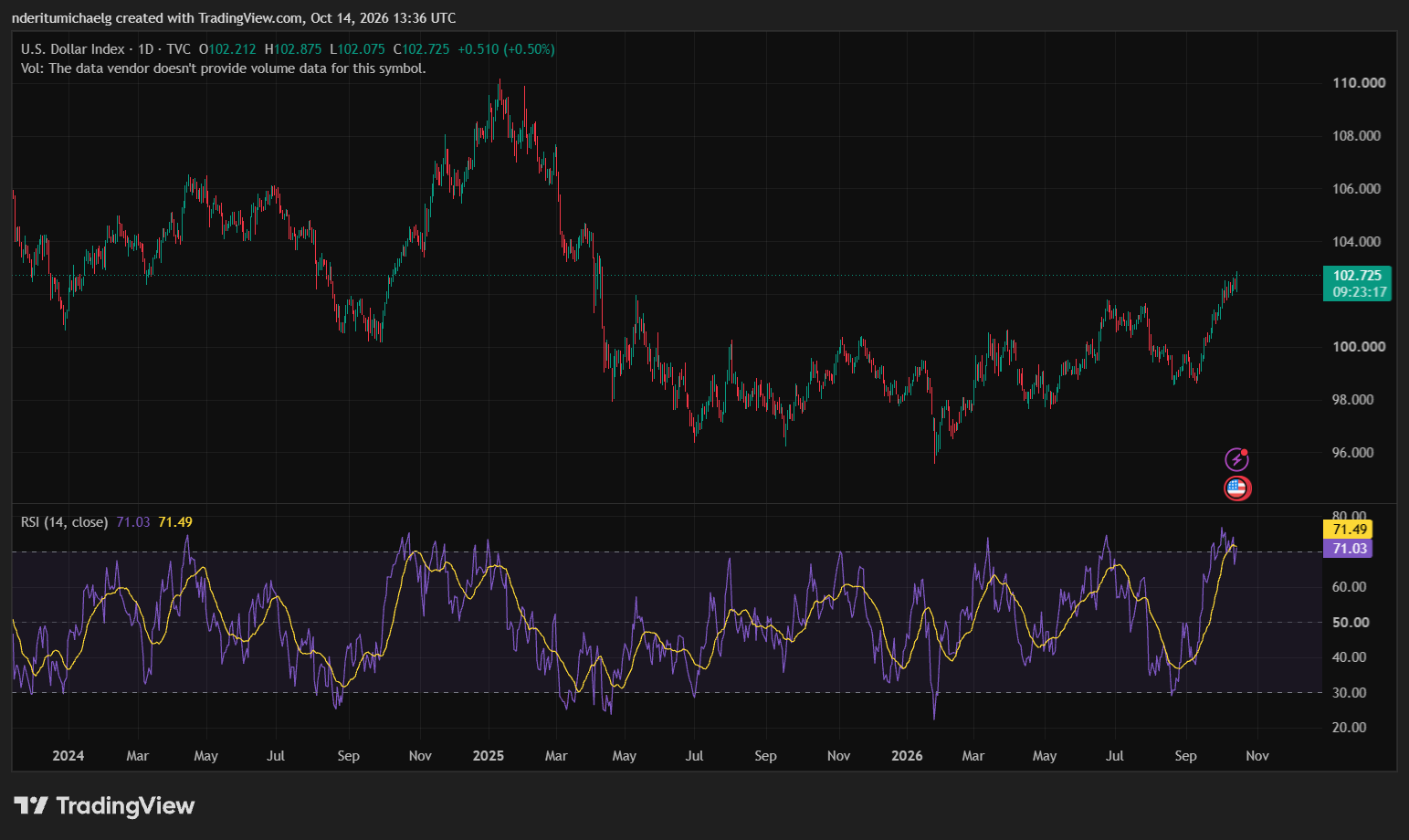
US Dollar index/ source: TradingView
While a higher dollar index may have some advantages such as cheaper imports, it is also a double-edged sword, particularly now that the bond market has been facing more pressure.
Rising Dollar Index Signals More Bond Market Risks
US long-term bond yields have recently rallied to multi-decade highs. The 10-year bond recently surged as high as 5.36%. The last time it was this high was in March 2002.
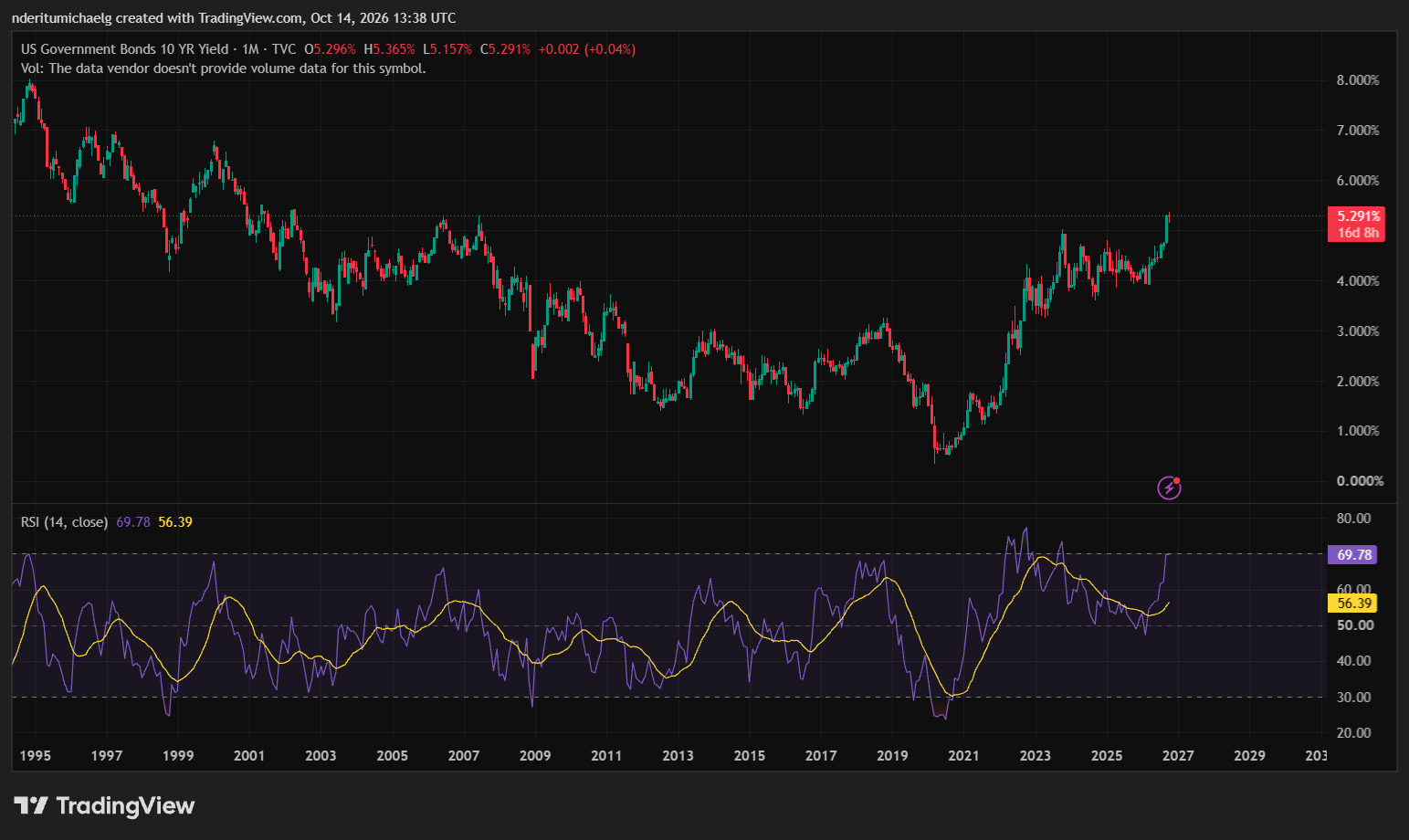
Meanwhile, the 30-year US long-term bond yield surged to 5.73%. Levels were also seen in March 2002. These rising bond yields were the result of investor demand for higher compensation for taking on more risk, especially with the US debt ballooning to concerning levels.
However, the US Treasury’s interventions have recently attempted to salvage the situation by issuing short-term debt to buy back long-term bonds. Those buybacks and subsequent demand, especially from the international markets, were likely the key reasons behind the slight bond yield cooldown in the last few days.
Analysts now believe that the temporary relief on the bond market may be short-lived if the FED raises interest rates. For context, higher interest rates could spill over into the bond market, undermining the recent buyback efforts.
Here’s Why Rising Bond Yields Are a Big Concern
Rising bond yields are a symptom of a much bigger problem. The debt problem. But just how big of a problem is it?
According to the Kobeissi Letter, the cost of servicing US debt has almost tripled since 2020. The interest that the US government is paying on the debt has become the second biggest expense after Social Security spending.
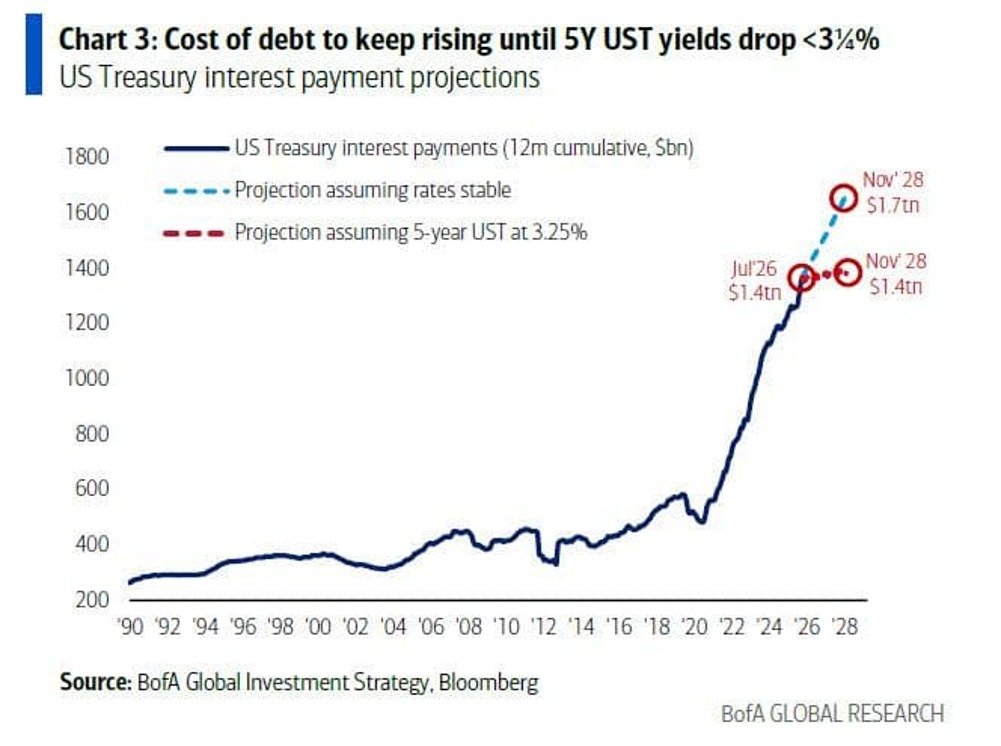
Source: BofA Global Investment Strategy, Bloomberg
For context, the US now pays more in interest repayments than its entire military budget. Moreover, higher bond yields reflect the rising concerns about a potential debt default.
Investors have therefore been demanding higher rates to account for the rising risk. In the meantime, the rising bond yields exacerbate the debt situation. The higher the bond yields, the more expensive the repayments become.
What Does This Mean For The Dollar?
In summary, the FED might end up raising interest rates to combat the rising inflation. However, this outcome will place more pressure on the bond market. This means the US government is currently in an uncomfortable position, with no clear way out in the vicinity.
The US is now piling on debt quite fast, and the markets are no doubt getting anxious about it. The biggest risk now is that the US could be in a debt spiral that may be difficult to get out of.
That outcome may send the USD into more turbulent waters in the next few years and possibly threaten its global dominance. Meanwhile, the crude oil situation might be one of the key reasons behind the recent dollar index rally. Afterall, the USD still holds on to a dominant position in energy purchases, especially those related to crude oil.
Also check : Forex Brokers Compared: Fees, Regulation & Platforms